

In today’s fast-paced digital world, having a solid digital marketing budget isn’t just a luxury it’s a necessity. Whether you’re a small business owner in BC or part of a growing startup, knowing where to allocate your marketing dollars can make or break your growth strategy. But honestly, budgeting for digital marketing can feel like navigating a maze. Let’s break it down, step by step, so you can invest smartly and see real results.
Understanding Your Digital Marketing Budget
A digital marketing budget is essentially a roadmap for your business’s online success. It’s a plan that details how much money you will spend on marketing activities across channels like social media, search engines, email, and content marketing. Without it, even the best strategies can fail due to inconsistent funding or misallocated resources.
So, how much should you allocate in 2026? A common rule of thumb is to invest 5–12% of your revenue into marketing, but the actual percentage depends on your industry, business goals, and growth stage. In BC, businesses operating in competitive sectors may lean toward the higher end to stay ahead of local competitors.
Factors That Influence Your Budget
Before you divide your marketing dollars, you need to consider key factors:
Business Goals
Are you aiming for brand awareness, lead generation, or direct sales? Goals determine where your money should go. For instance, a startup focusing on growth might invest heavily in PPC marketing to generate immediate leads, while an established company could prioritize content marketing for long-term engagement.
Target Audience
Knowing your audience is critical. Younger demographics respond well to social media campaigns, whereas B2B clients may engage more with email campaigns and LinkedIn outreach. In Canada, regional preferences can influence which platforms perform best, so localized targeting matters.
Market Competition
The level of competition affects your budget needs. In highly competitive sectors in Vancouver or the Greater BC area, you might need a larger spend on Google Ads Services near me or Retargeting Ads in Canada to stand out.
Key Channels to Allocate Your Budget
Now that you understand the factors, let’s discuss the major channels where your budget can deliver maximum ROI.
Search Engine Marketing (SEM)
Search engines are often the first touchpoint for potential customers. Allocating a portion of your budget to Google Ads Optimization can drive high-intent traffic. Keep in mind Google Ads Cost varies depending on keywords and competition. Experiment with bidding strategies to maximize your ROI without overspending.
Paid Search vs Organic
While SEO is crucial for long-term growth, paid search campaigns provide immediate visibility. A balanced approach ensures that your business maintains steady traffic while building authority over time.
Social Media Advertising
Platforms like Facebook, Instagram, LinkedIn, and TikTok offer targeted campaigns that can generate leads and sales. Investing in Social Media Advertising Platforms for Canada allows you to segment audiences based on location, interests, and behaviors.
Choosing the Right Platform
Not all platforms deliver the same ROI. For BC-based businesses:
- LinkedIn works well for B2B campaigns.
- Instagram and Facebook excel for consumer-focused promotions.
- TikTok is emerging as a trend-driven, high-engagement channel.
Retargeting Campaigns
Ever noticed ads following you after visiting a website? That’s retargeting. Allocating funds to Retargeting Ads in Canada is highly effective for converting warm leads who have shown interest but haven’t yet purchased.
Content Marketing and SEO
Content remains king. Investing in high-quality blog posts, videos, and guides helps your site rank naturally and keeps your audience engaged. A digital marketing company can guide you through keyword strategy and content creation to ensure consistency and relevance.
Email Marketing
Email is cost-effective and delivers measurable results. Segment your audience and personalize messages to increase open and click-through rates. Don’t underestimate its power it’s a channel that can complement both PPC marketing and organic efforts.
Conversion Rate Optimization (CRO)
CRO ensures your marketing dollars translate into tangible results. By testing landing pages, forms, and calls-to-action, you can maximize the impact of every campaign dollar.
Analytics and Tracking
Investing in analytics tools allows you to track the performance of all channels. Without proper measurement, you’re flying blind. Tools like Google Analytics, Tag Manager, and campaign-specific dashboards help you understand ROI and refine your strategy.
How to Allocate Your Budget Effectively
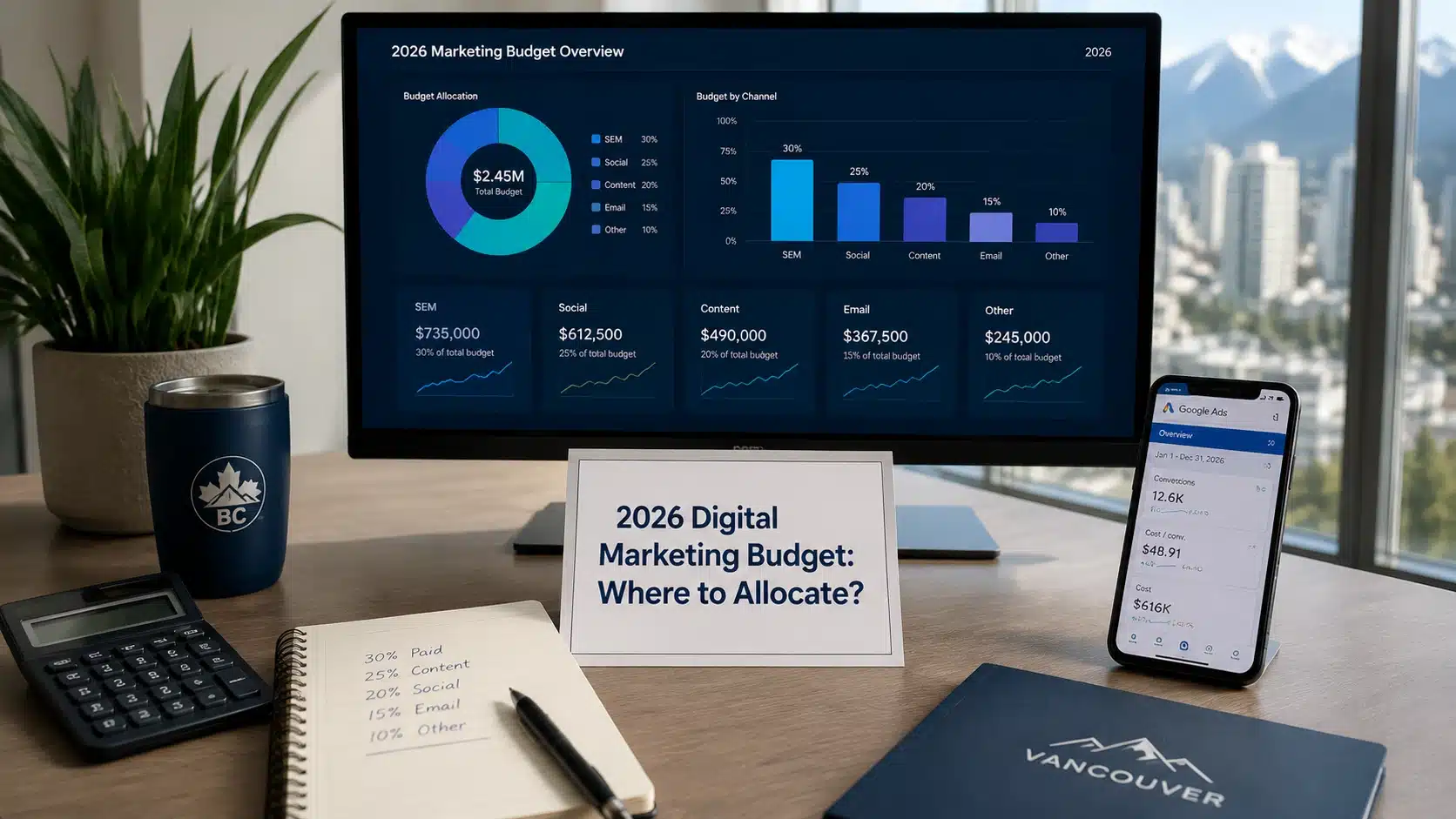
So, how do you divide your digital marketing budget across these channels? Here’s a practical approach:
Start With a Percentage-Based Model
- 30% Paid Advertising: Includes Google Ads, social media campaigns, and retargeting.
- 25% Content Creation: Blogs, videos, infographics, guides.
- 15% SEO & Organic Growth: On-page optimization, link-building, local SEO.
- 10% Email & CRM: Nurturing leads and customers.
- 10% Analytics & Tools: Tracking, reporting, and insights.
- 10% Contingency & Testing: Flexibility for experiments or seasonal campaigns.
Of course, these percentages are flexible. For example, if you’re heavily reliant on Google Ads, you may shift funds toward paid campaigns initially.
Consider Seasonal Campaigns
Some industries experience fluctuations. Retail, for instance, peaks during the holiday season. Budget for Google Ads Services near me or holiday-specific social media campaigns to capture timely opportunities.
Factor in Regional Costs
Marketing costs vary across Canada. BC’s competitive markets may require higher spends for paid search compared to smaller towns. Adjust your budget according to local digital marketing agency rates and competitive intensity.
Real-Life Example: Allocating $50,000
Let’s say you have a digital marketing budget of $50,000. You might allocate:
- $15,000 to Google Ads and PPC campaigns.
- $12,500 to content creation (blogs, videos).
- $7,500 to SEO optimization.
- $5,000 to social media advertising.
- $5,000 to email campaigns.
- $5,000 for analytics, tools, and testing.
This allocation ensures balanced exposure, both immediate and long-term.
Working With a Digital Marketing Agency
Hiring a Digital marketing agency can help you optimize your budget, avoid common pitfalls, and accelerate results. Agencies bring expertise in Google Ads Optimization, PPC marketing, and multi-channel campaigns, making your investment more effective.
- Look for agencies with proven experience in BC.
- Ensure they provide transparent reporting and clear KPIs.
- Leverage their knowledge to maximize ROI.
Mistakes to Avoid
Even experienced marketers slip up. Watch out for these:
- Over-spending on a single channel: Diversify your budget.
- Neglecting analytics: No measurement means no optimization.
- Ignoring retargeting campaigns: You could be missing warm leads.
- Failing to adjust for seasonality: Budget should be flexible.
The Future of Digital Marketing in 2026
As we move further into 2026, trends like AI-driven personalization, video content, and automation will shape marketing budgets. Investing strategically now ensures you’re ready to adapt to innovations without overspending.
Conclusion
Building a digital marketing budget for 2026 is about balance, insight, and flexibility. Prioritize channels that align with your goals, measure performance consistently, and don’t be afraid to adjust allocations as you learn what drives results. Remember, a well-planned budget isn’t just about spending it’s about investing in growth, visibility, and customer engagement. If you’re ready to optimize your marketing dollars and see real impact, now’s the time to act. Connect with a trusted digital marketing agency in BC and start building a budget that truly works.