
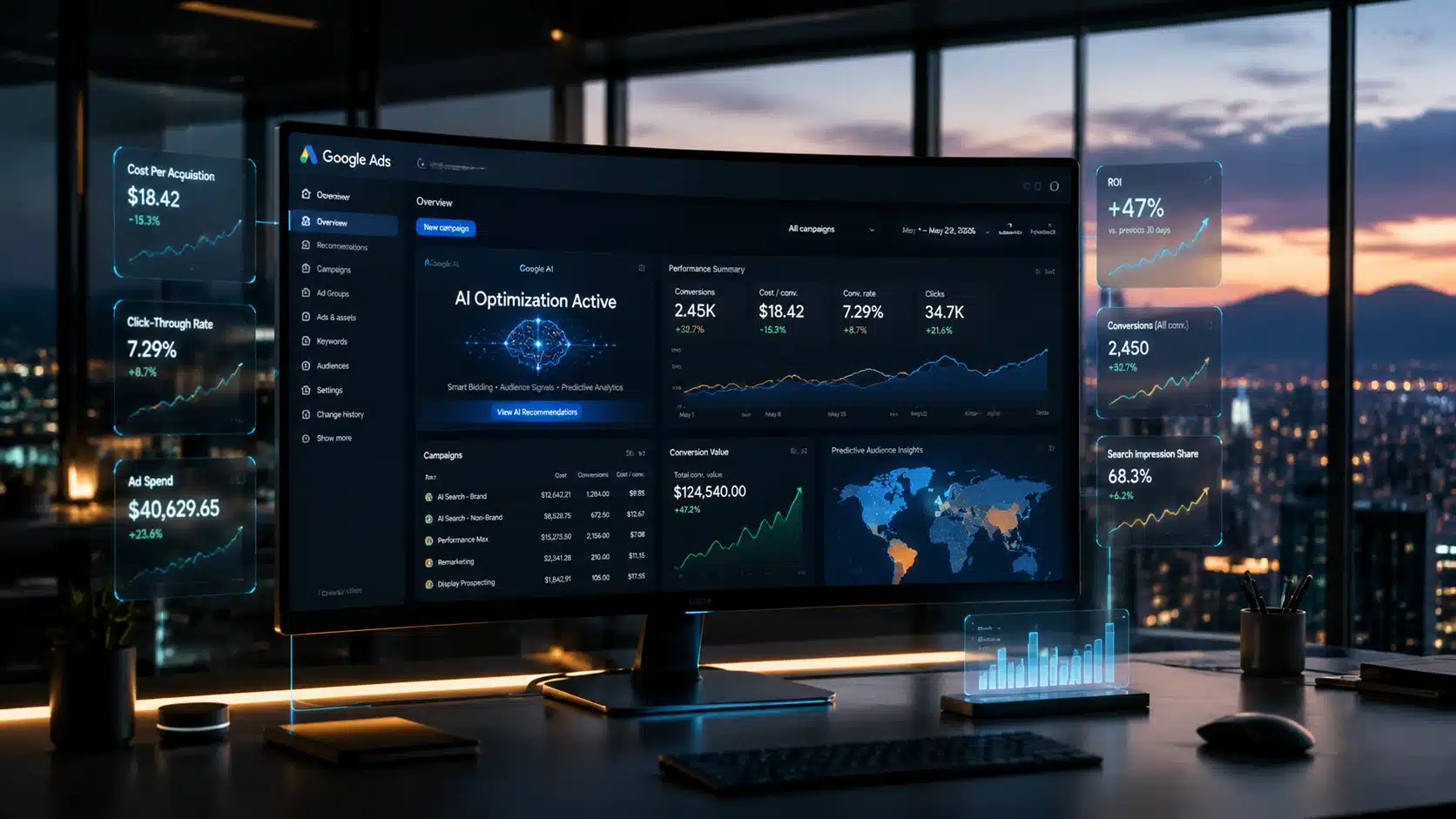
In the fast-paced world of digital marketing, staying ahead of the competition is essential. Google Ads Optimization has evolved dramatically with AI integration, offering unprecedented ways to enhance campaign performance. Whether you’re a seasoned marketer or a business owner exploring PPC marketing for the first time, understanding AI-driven strategies can significantly improve your ROI. In this guide, we’ll break down the practical steps, tools, and insights needed to optimize your Google Ads campaigns in 2026, specifically tailored for businesses in BC.
Understanding Google Ads Optimization in 2026
What Is Google Ads Optimization?
At its core, Google Ads Optimization involves tweaking and refining your PPC campaigns to achieve better results at a lower cost. Traditionally, optimization required manual A/B testing, keyword research, and bid adjustments. Today, AI-powered tools automate much of this process, learning from your data to improve targeting, ad copy, and budget allocation in real-time.
Why does this matter? Imagine being able to predict which keywords will convert before your competitors even notice a trend. That’s the power of AI in Google Ads.
Why AI Is a Game-Changer for Google Ads
AI enhances your campaigns by:
- Predicting user behavior: AI analyzes past data to forecast which audiences are more likely to convert.
- Automating bid strategies: Instead of manually adjusting bids, AI can optimize bids across devices, locations, and demographics.
- Ad personalization: Machine learning tailors ad copy for different audiences, boosting engagement.
- Continuous learning: AI algorithms adapt based on campaign performance, ensuring ongoing improvements.
Honestly, trying to compete without AI today is like playing hockey without skates possible, but painfully slow.
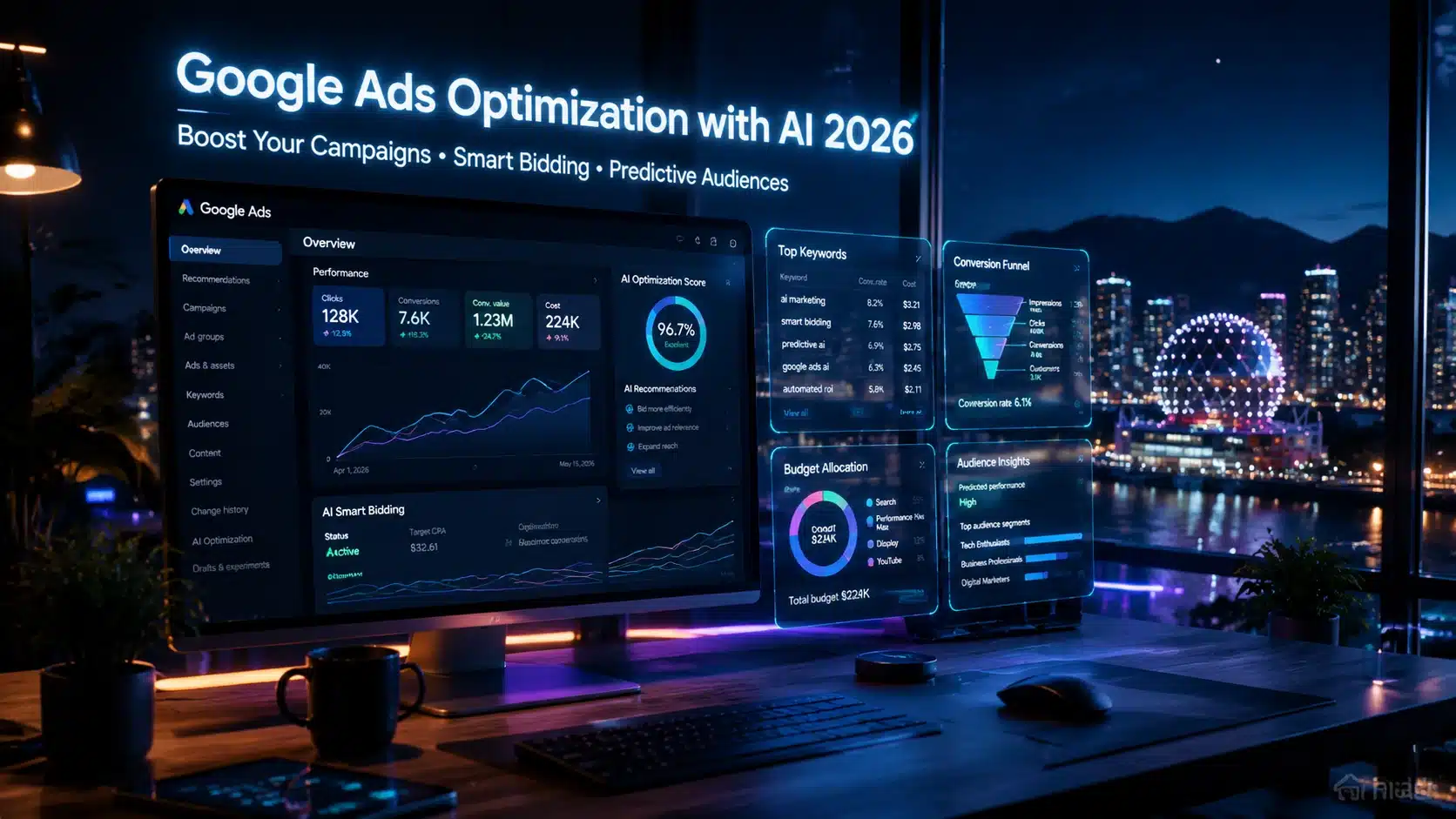
Setting Up Your Campaign for Success
Defining Your Objectives
Before diving into AI tools, clearly define your campaign goals:
- Lead generation: Target prospects ready to inquire about your services.
- E-commerce sales: Focus on high-intent shoppers.
- Brand awareness: Increase visibility across key demographics.
Your objectives will guide how AI optimizes your ads. For instance, a campaign for Social Media Advertising Platforms may emphasize reach and engagement, while a PPC campaign focused on Google Ads Services near me should prioritize conversions.
Structuring Your Google Ads Account
A well-structured account is crucial for optimization. Consider:
- Campaign segmentation: Separate campaigns by product, service, or location (e.g., Vancouver vs. BC-wide).
- Ad groups: Group similar keywords for better AI performance.
- Negative keywords: Prevent irrelevant traffic and wasted spend.
This structure enables AI to more accurately predict performance at the ad group level, improving efficiency.
Leveraging AI Tools for Optimization
Smart Bidding Strategies
AI-driven bidding strategies include:
- Maximize Conversions: Automatically sets bids to get the most conversions within your budget.
- Target CPA (Cost Per Acquisition): Optimizes bids to achieve a specific cost per lead or sale.
- Target ROAS (Return on Ad Spend): Adjusts bids to hit your desired revenue targets.
Using these strategies, you can scale campaigns while maintaining control over your Digital Marketing Budget.
Responsive Search Ads and AI Copywriting
AI can dynamically generate ad copy based on keywords, headlines, and descriptions. This enables Responsive Search Ads to:
- Test multiple combinations of headlines and descriptions.
- Identify the highest-performing variations automatically.
- Continuously learn which messaging resonates with different audience segments.
Let’s be real, manually testing hundreds of ad variations is exhausting AI handles this effortlessly.
AI-Powered Audience Targeting
Predictive Audiences
AI predicts which users are most likely to convert based on historical behavior, demographics, and engagement patterns. For example:
- Users who recently searched for Google Ads Cost may be ready to purchase.
- High-intent audiences can be targeted with custom messaging tailored to their stage in the buying journey.
Retargeting with AI
Retargeting Ads in Canada are more effective than ever with AI. Machine learning can:
- Automatically segment visitors based on behavior.
- Adjust ad frequency and timing for maximum impact.
- Optimize cross-device retargeting to recapture potential customers wherever they are online.
For instance, a visitor who browsed your Digital marketing company services on mobile might see a personalized ad on desktop later that day.
Optimizing Ad Spend
Budget Allocation with AI
AI algorithms continuously analyze campaign performance to allocate your budget efficiently across campaigns, ad groups, and keywords. This helps you:
- Reduce wasted spend on underperforming ads.
- Increase investment in high-performing campaigns.
- Forecast monthly ad spend more accurately.
By integrating AI, your Google Ads campaigns adapt in real-time, keeping your cost per conversion low.
Evaluating Google Ads Cost
Understanding Google Ads Cost is essential for effective planning. Factors influencing cost include:
- Keyword competition
- Quality score
- Audience targeting
- Ad relevance
AI tools analyze these factors and suggest bid adjustments, ensuring you get the most value out of your budget.
Monitoring and Analytics
Using AI for Performance Insights
AI-powered analytics dashboards provide actionable insights:
- Identify which keywords and ads are converting.
- Detect patterns in click-through rates and conversion paths.
- Forecast trends based on historical data.
These insights empower marketers to make informed decisions without manually sifting through endless spreadsheets.
Integrating With Other Digital Channels
For maximum impact, combine Google Ads optimization with:
- Social Media Advertising Platforms for cross-channel engagement.
- Email marketing automation to nurture leads.
- SEO strategies to complement PPC efforts.
This multi-channel approach ensures consistent messaging and improved conversion rates.
Common Challenges and Solutions
Dealing With AI Complexity
AI can be intimidating. Here’s how to manage it:
- Start small with automated bidding and responsive ads.
- Regularly review AI recommendations before implementation.
- Keep clear campaign objectives and KPIs.
Avoiding Overspending
Even AI can overspend if misconfigured. Prevent this by:
- Setting daily and monthly budget caps.
- Monitoring campaigns frequently.
- Using AI to suggest adjustments, not blindly implement them.
Real-Life Example of AI Success in BC
Imagine a Vancouver-based e-commerce company selling eco-friendly products. By implementing AI-powered Google Ads Optimization, they:
- Increased click-through rates by 35%
- Reduced cost per acquisition by 22%
- Achieved 3x ROI within three months
This real-life scenario shows how combining AI with strategic planning can transform campaign outcomes.
Tips for Working With a Digital Marketing Agency
When partnering with a Digital marketing agency:
- Ask about AI capabilities and experience with Google Ads Services near me.
- Review case studies showing measurable ROI.
- Ensure transparent reporting and real-time insights.
A skilled agency can amplify your efforts, making AI optimization more accessible and effective.
Future Trends in Google Ads and AI
- Voice search integration: Optimizing ads for conversational queries.
- Visual search advertising: AI interprets images to match search intent.
- Advanced predictive analytics: Anticipates market trends and customer needs.
Staying ahead of these trends ensures your campaigns remain competitive in BC’s dynamic digital landscape.
Key Takeaways for Successful Campaigns
- AI is no longer optional it’s essential for modern Google Ads Optimization.
- Campaign structure, objectives, and KPIs are critical for AI effectiveness.
- Combine AI with strategic planning, Digital Marketing Budget management, and multi-channel integration.
- Partnering with a professional agency can accelerate results.
Conclusion
Google Ads Optimization with AI is revolutionizing how businesses in BC approach digital marketing. By embracing AI-driven bidding, responsive ads, predictive targeting, and smart analytics, marketers can maximize ROI, reduce wasted spend, and create more personalized ad experiences. Let’s be real investing in AI isn’t just a competitive advantage; it’s the future of successful PPC marketing. If you’re ready to boost your campaigns and see measurable results, contact a trusted digital marketing agency today and start leveraging AI for your Google Ads success.